
How to measure yourself in four minutes
Three numbers, two units, and the four minutes that make every chart in this shop work for you.
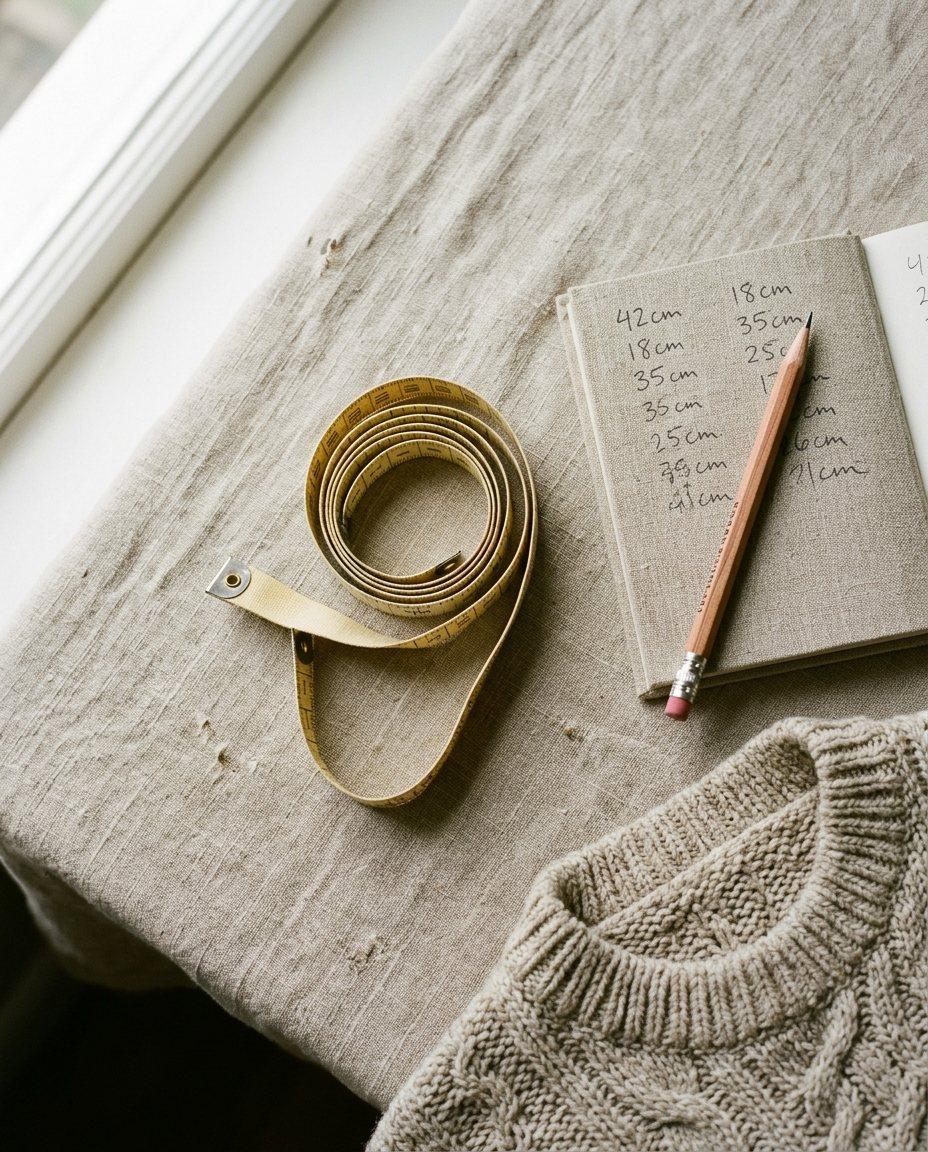
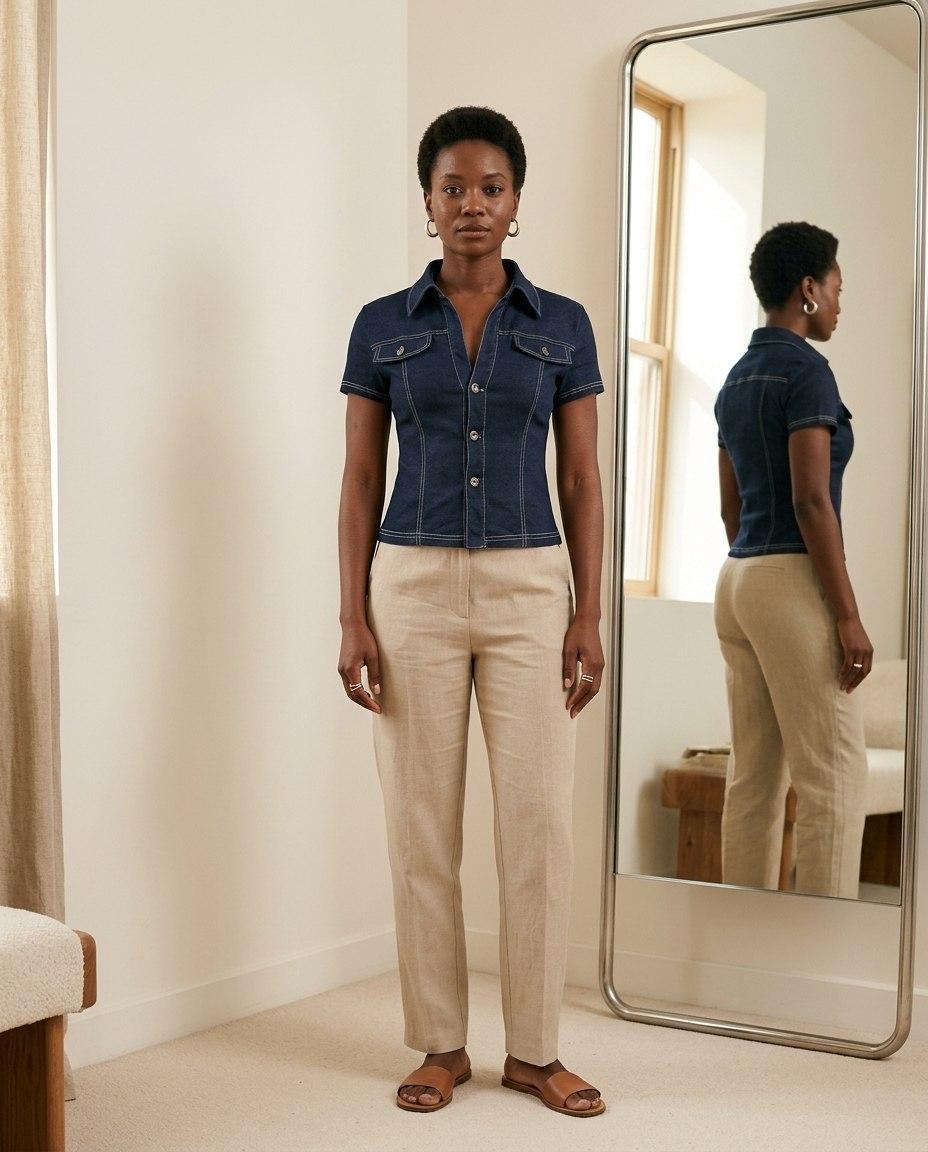
Standing in a thin top in front of a mirror, a soft tape, and four minutes is all the equipment fit requires. Stand relaxed with your arms down and let the tape breathe — snug against the body, never squeezing.
The three numbers
Bust, across the fullest part with the tape level under the arms and around the back. Waist, at the narrowest point of your torso, usually just above the navel. Hip, around the fullest part of your seat with your feet together. Breathe out normally for the bust and the waist.
A tape measure beats every size label ever printed.
— the studio
Write both units
We publish charts in centimetres first, inches where they help: divide centimetres by 2.54. Write the three numbers somewhere you'll find again and note which one changed last — for most people the waist moves before the bust does.
Against the chart
Compare your numbers with the chart on any piece you're considering. A garment reads larger than the body it goes onto, and how much larger depends entirely on the cut — that's what the chart minus body tells you. When a piece arrives and the numbers disagree, the return window is 30 days. If you shop in US sizes, the size guide carries the standard US women's chart and tells you which US size those three numbers are.

More from the journal.
- What we're wearing this OctoberCold mornings, warm afternoons — the season is one long layering problem and a handful of pieces solve it.
- Packing a carry-on in knitsKnit fabric rolls flat, springs back, and never reads as slept-in — a good carry-on is a knit problem.
- A five-piece weekOne dress, one knit, one jacket, one skirt, one set — and how they cover Monday to Sunday.
- How to layer a knit over a dressThe fastest way to take a summer dress into autumn, and the three proportions that always work.
- Matching sets, three waysA set is one outfit you don't have to think about — and two separates when you do.
- How to care for knitwear so it lastsWool, cashmere and cotton knitwear reward a little attention and punish none. The whole routine takes five minutes a season.
- Three pieces, five outfitsA small edit works because the pieces talk to each other. Here is one three-piece set and the five ways it dresses a week.
- The art of the layerLayering is not about warmth. It is about control — over temperature, over formality, over the shape of a day.
- Why we don't do flash salesNo countdown clocks, no compare-at theatre, no discount games. One price, shown before you choose. Here is why.
- How to read a size chart (and when to ignore it)Charts are a starting point, not a verdict. Here is how to use them and the three cases where you should trust the tape measure instead.
- The capsule checklistTwelve pieces. Forty outfits. The arithmetic of a wardrobe that works every morning without thinking.
- Fabric 101: what the label actually meansCotton, wool, polyester, viscose — the label tells you what the garment is made of, but rarely what that means for how it wears.
- How to build a travel wardrobeOne carry-on. Ten days. The packing arithmetic that makes it possible without looking like you packed for ten days.
- How to photograph your outfit (without a photographer)The photos you take of what you wear are the most useful thing in your wardrobe. Here is how to take better ones with a phone.
- The return policy, explainedThirty days. By mail. No restocking fee. Here is exactly how it works and what to expect.
- How to style a blazer (without looking like you're going to a meeting)A blazer is the most versatile piece in a wardrobe and the most misused. Here is how to wear it without the office.
- How to dress for a heatwaveWhen it is 35 degrees and the air does not move, dressing becomes a survival skill. Here is how to stay cool and look like you are not trying.
- How to build a work wardrobeFive pieces. Two weeks of outfits. No decision fatigue before 9am.
- How to care for denim (so it fades the right way)Denim is the only fabric that improves with wear. Here is how to help it along and avoid the mistakes that ruin it.
- How to dress for a wedding (without spending a fortune on a one-wear dress)A wedding outfit should be something you wear again. Here is how to choose one that earns its place in your wardrobe.